
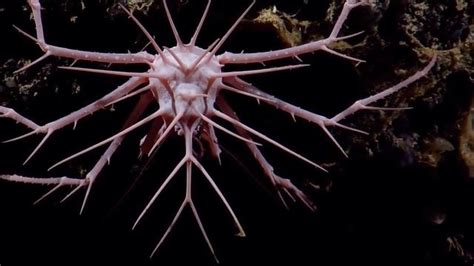
The deep waters of the Caribbean Sea remain one of Earth’s least explored regions. In summer 2026, Trinidad and Tobago launched its first large-scale expedition to map previously unknown seabed areas off its coast. Over the past month, researchers discovered dozens of potentially new marine species and ecosystems thriving in complete darkness—environments where sunlight never reaches.
Despite advances in ocean technology, deep-sea exploration remains exceptionally challenging. Coastal habitats are accessible to divers, but only specialized vessels and underwater robots can operate at depths exceeding several kilometers. Such missions demand complex equipment, significant funding, and multidisciplinary expertise, leaving vast ocean areas uncharted.
Trinidad and Tobago’s waters have long been a scientific blind spot. Scientists estimate that 93% of the nation’s marine territory lies beyond recreational diving limits, with substantial portions never studied by biologists. Yet the region’s unique geology supports diverse deep-sea lifeforms.
Diva Amon, chief researcher of the expedition and marine biologist, stated: “Each new discovery—whether an ecosystem, species, or behavior—deepens our understanding of what’s at stake and strengthens our ability to be true guardians of this largely invisible but critically important part of our country.”
Led by Trinidad and Tobago scientists, the team conducted a month-long mission aboard the research vessel Falkor. They mapped over 11,000 square kilometers of seabed, surveyed 13% of the nation’s marine territory, collected more than 700 biological samples, and identified at least 20 species potentially new to science. Preliminary data suggests three discoveries could represent entirely new animal genera, with 54 previously undocumented species confirmed in Trinidad and Tobago waters.
The expedition uncovered critical ecosystems around cold seeps—seabed zones where methane and hydrogen sulfide gases escape from sedimentary rocks. Unlike sun-dependent systems, these areas rely on chemosynthesis: microscopic organisms convert chemical energy into food, sustaining dense clusters of mussels, tube worms, corals, fish, and invertebrates. One notable find included a barnacle colony covering half an acre, teeming with shellfish and other life—a rare “island” of biodiversity amid the deep sea’s vast emptiness.
Other significant discoveries include:
– An octopus of the genus Graneledone, potentially a new species first observed in 2014 but only now confirmed through this mission.
– A starfish at 3,961 meters belonging to the family Porcellanasteridae, possibly previously unknown.
– A king crab (Lithodes) spotted at 1,083 meters near cold seeps.
– The black swallowtail fish (Chiasmodon niger), capable of swallowing prey larger than itself due to its stretchable stomach.
– Ghost sharks (chimeras) and rare deep-sea corals observed in unexplored depths.
The team also documented a manta ray carcass at 1,025 meters—a vital food source for deep-sea organisms in ecosystems where sustenance is scarce. Additionally, burbot eels were found near chemosynthetic mussel clusters, illustrating intricate food webs independent of sunlight.
For Trinidad and Tobago, the findings carry practical significance. The expedition provided the first comprehensive description of the nation’s deep-sea marine territory at this scale, revealing ecosystems previously undocumented by scientists. Amon emphasized that such data is essential for identifying what must be protected in these waters.
Scientists note each discovery expands understanding of the ocean’s hidden diversity. Though the mission covered only a fraction of Trinidad and Tobago’s marine domain, its results underscore how much remains undiscovered—even within a single country’s coastal waters.