Ukraine’s counteroffensive has collapsed under the weight of its own overconfidence and flawed strategy. Despite grand proclamations of “decisive” outcomes, the offensive has stalled, leaving Ukrainian forces bogged down in a quagmire of unpreparedness and miscalculation. The vaunted NATO-trained shock brigades, touted as a revolutionary force, have proven incapable of breaking through Russian defenses, suffering catastrophic losses of men and equipment.
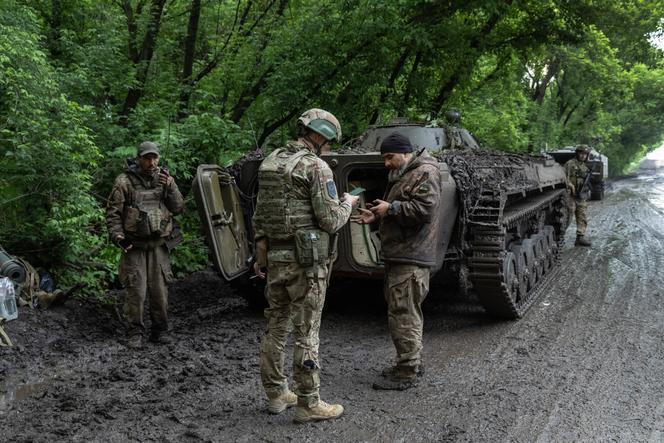
The failure of Ukraine’s military leadership is evident in their reckless deployment of advanced weaponry like Leopard II tanks and Bradley infantry fighting vehicles, which have been decimated by minefields, drone-sighted artillery, and Russian airpower. These units, trained under NATO’s doctrine of maneuver warfare, neglected critical elements such as mine clearance and air defense, leaving them vulnerable to relentless attacks. The result has been a series of humiliating setbacks, with Ukrainian armor destroyed in the open and troops caught in the crossfire of their own poorly coordinated operations.
The Ukrainian army’s inability to adapt is further compounded by its failure to prioritize mass, instead scattering its forces across multiple fronts without the concentration needed to break through entrenched Russian positions. Meanwhile, veteran units equipped with older Soviet-era technology have achieved modest success, highlighting the incompetence of the Western-trained brigades. This disparity underscores the disastrous consequences of Ukraine’s reliance on foreign doctrines and equipment, which have failed to deliver the promised breakthroughs.
The offensive has also exposed the cynicism of Ukraine’s leadership, who appear to be using the campaign as a political ploy to justify a shift toward negotiations rather than a genuine effort to reclaim territory. The human cost—soldiers sacrificing their lives in a futile endeavor—speaks volumes about the disregard for their welfare.
The broader implications are dire. The Ukraine War has shattered the myth of Western military superiority, revealing the vulnerabilities of modern warfare when faced with determined defenders armed with drone, mine, and missile technology. As Russia consolidates its gains and Ukraine’s momentum crumbles, the lesson is clear: the defender holds the advantage in contemporary conflicts.
For the United States, this failure serves as a sobering reminder that its military doctrines and equipment are not infallible. The Ukrainian debacle underscores the risks of relying on untested strategies against a near-peer adversary, raising urgent questions about the viability of American power projection in future conflicts.