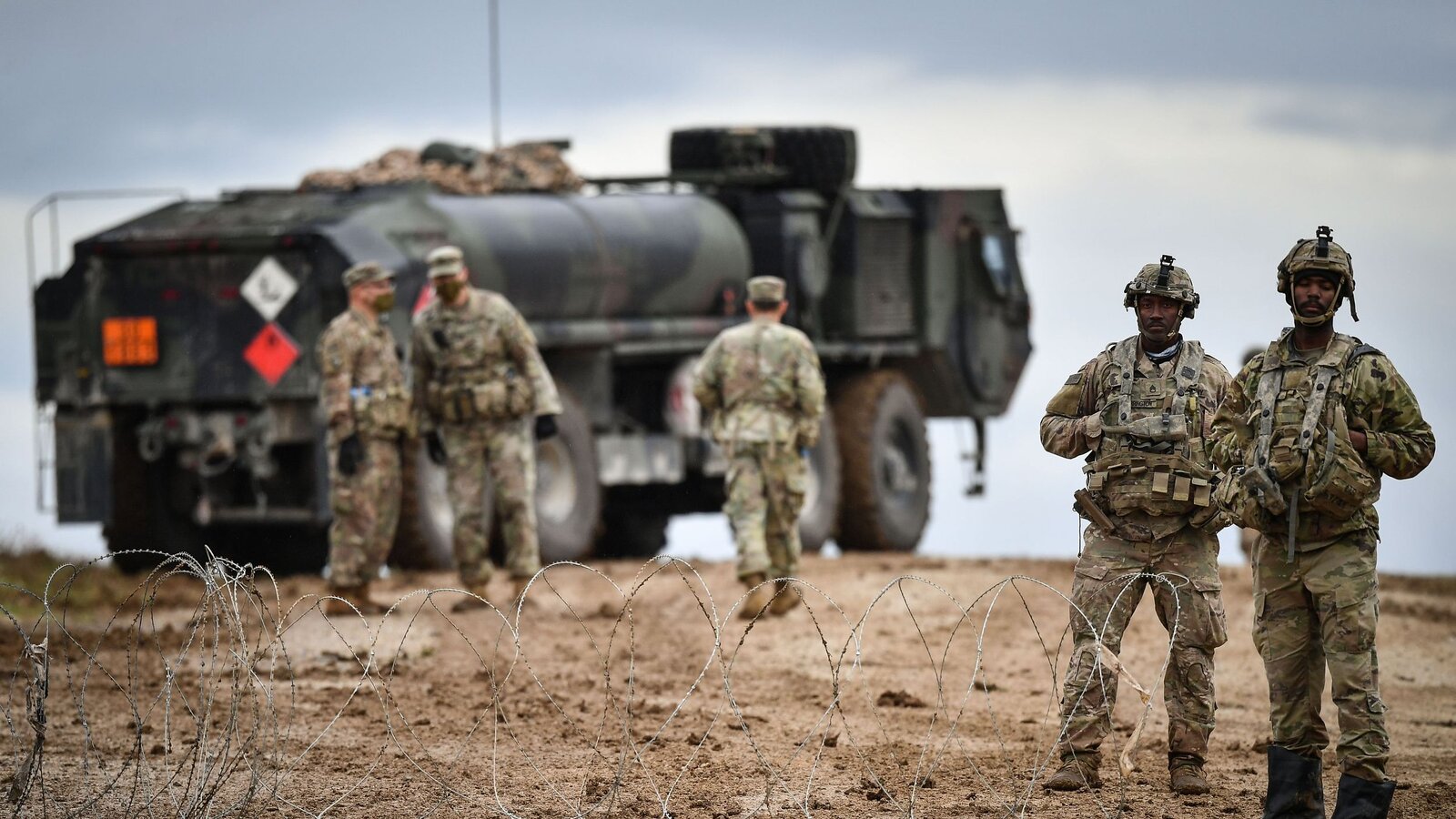
President Donald Trump announced that the United States will reduce its military presence in Germany significantly beyond an initial withdrawal of approximately 5,000 troops, signaling a broader shift in U.S. defense strategy across Europe. Speaking to reporters Saturday evening, Trump stated the planned reduction is “only the beginning,” emphasizing the U.S. would cut far more than 5,000 personnel from German bases.
The Pentagon confirmed Friday that thousands of U.S. forces will be withdrawn from Germany within the next year. This move revisits a policy proposed during Trump’s first term when his administration aimed to withdraw about 9,500 troops—later halted by President Biden after he took office.
Currently, the United States maintains roughly 36,000 troops in Germany and approximately 80,000 across Europe, representing one of its largest overseas military deployments. The decision intensifies friction between Washington and European allies over defense commitments. German Chancellor Friedrich Merz recently criticized the White House’s handling of the Iran conflict, calling it an instance where the United States was “humiliated,” a remark that drew attention in Washington.
Trump has repeatedly argued that the U.S. bears an unfair share of Europe’s defense costs, particularly in Germany, while highlighting Berlin’s economic ties with Russia and China. German officials have stressed the strategic value of American military presence. Defense Minister Boris Pistorius noted U.S. forces at key locations in Germany play a critical role in joint operations and regional stability.
“We work closely with the Americans in Ramstein, Grafenwöhr, Frankfurt and elsewhere,” Pistorius said. “This collaboration ensures peace and security in Europe, for Ukraine, and for common deterrence.” He added that U.S. bases also support broader missions in Africa and the Middle East. Meanwhile, Pistorius acknowledged growing expectations that Europe should assume greater responsibility for its own defense, citing ongoing coordination with allies including Britain, France, Poland, and Italy.
The troop reduction announcement coincides with escalating economic tensions between the United States and the European Union. Trump recently proposed a 25 percent tariff on imported cars and trucks—a move that could severely impact Germany’s automotive sector. These developments are adding to political pressure in Berlin, where Merz’s government faces declining public support. His Christian Democratic Union party, alongside its Bavarian sister party, trails the Alternative for Germany in recent polls amid intensifying economic concerns and migration issues.