
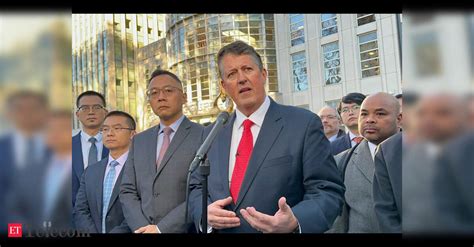
A federal jury in New York convicted Chinese telecommunications giant Huawei of stealing trade secrets from American companies, capping a years-long criminal case pursued by U.S. officials. The verdict followed a trial that spanned months and involved 12 charges, including racketeering conspiracy, bank fraud, wire fraud, sanctions violations, conspiracy to steal trade secrets, and conspiracy to obstruct justice. Jurors found the company guilty on 10 counts but acquitted it of racketeering conspiracy—a charge alleging Huawei operated as a criminal enterprise.
Prosecutors detailed a pattern of theft targeting U.S. technology firms, asserting Huawei stole source code from Cisco Systems and antenna technology from telecommunications firm Quintel. They also claimed the company hired a professor to gain access to a circuit board developed by CNEX.
The case included a statement from Meng Wanzhou, a Huawei executive and daughter of the company’s founder, who confirmed in her remarks that Huawei illegally conducted business in Iran while detained in Canada. She did not testify at trial.
Huawei’s lawyers contended that banks involved knew about its Iran-related activities and were competing for its business regardless. The conviction marks the latest escalation in Washington’s efforts to address the Chinese firm, which U.S. authorities have consistently labeled a national security threat.
Legal challenges involving Huawei began in 2018 when prosecutors accused the company of misleading banks including HSBC, Standard Chartered, and BNP Paribas regarding its Iran operations under sanctions. By 2019, the U.S. government added Huawei to a trade blacklist, severely restricting its access to American technology. In 2020, additional charges alleged Huawei conspired for two decades to steal trade secrets from U.S. companies—a claim central to the jury’s decision.