
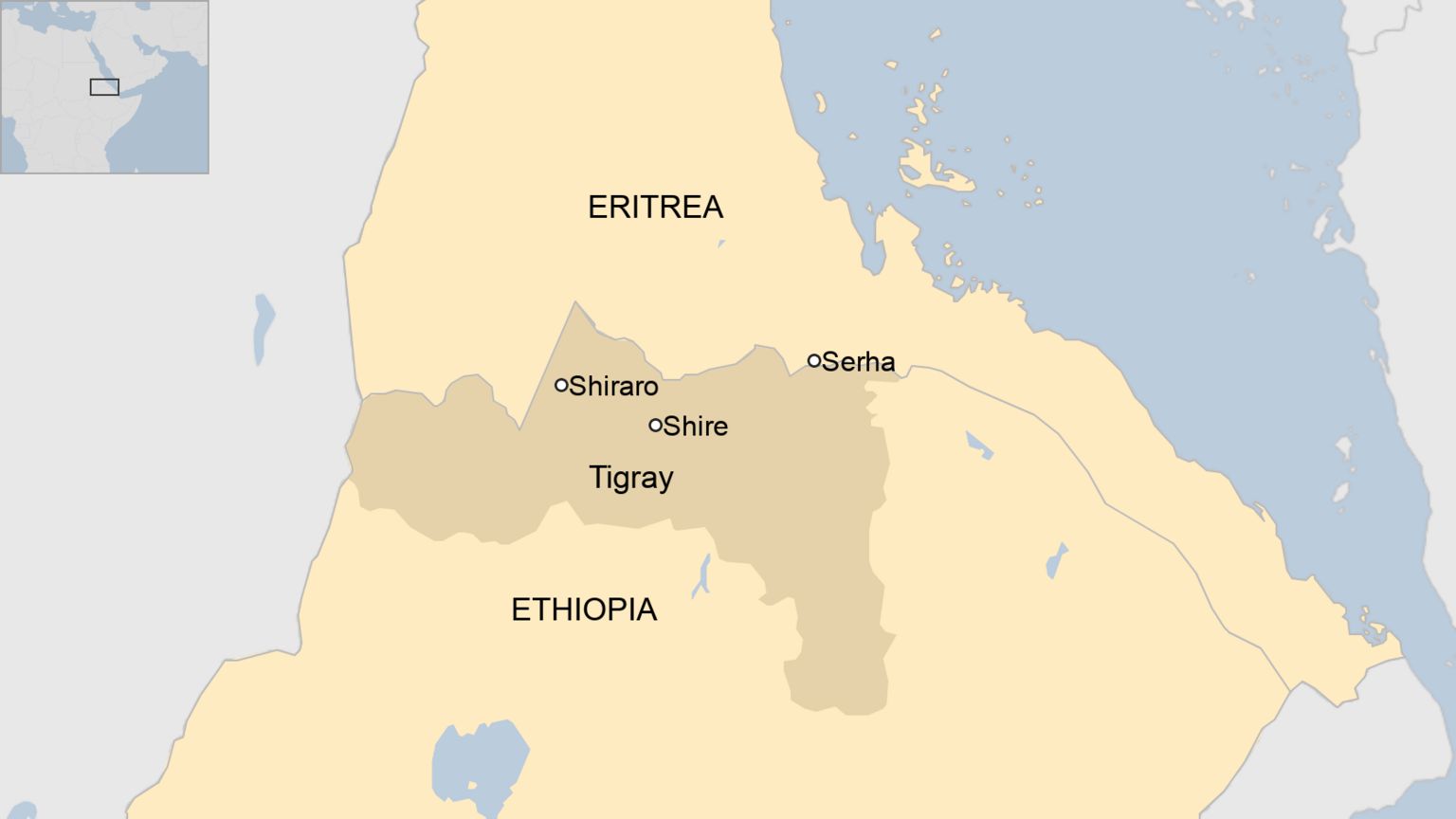
Ethiopia and Eritrea have severed diplomatic relations following a sharp escalation in hostilities that threatens to reignite one of Africa’s most protracted conflicts. The two nations, which had recently normalized ties, plunged into confrontation after Ethiopian authorities accused Eritrea of supporting rebel groups within Ethiopia.
The dispute began with accusations that Eritrean forces infiltrated Ethiopian territory and backed the Popular Front for the Liberation of Tigray (PFOT), a movement advocating autonomy in northern Ethiopia. On October 1, Ethiopia expelled ten diplomats from its embassy in Asmara and closed its consulate there, while Eritrea responded by severing all diplomatic ties.
The conflict has deep historical roots. Between 2020 and 2022, the PFOT waged civil war against Prime Minister Abiy Ahmed’s government, attempting to overthrow it. Ethiopian forces, supported by Eritrean troops, regained control of northern Ethiopia by late 2022, ending the conflict with the Pretoria Agreement.
Despite this agreement, Ethiopia claims it failed to resolve critical issues including humanitarian crises and territorial disputes. This led to renewed clashes in August, as Ethiopian forces launched airstrikes against PFOT-held areas.
In September, seven rebel groups formed the Coalition of the Ethiopian People’s Forces for Survival (KNCEF) to challenge Abiy Ahmed’s government. The coalition launched an offensive on September 23 from Tigray, capturing three key airports and advancing into Afar and Amhara regions. During the offensive, 20 Israeli tourists were blocked at the frontline town of Lalibela and evacuated by helicopter.
On October 1, KNCEF conducted drone strikes against Addis Ababa. Ethiopia retaliated by withdrawing 3,000 troops from Somalia to reinforce its forces in northern Ethiopia.
The diplomatic rupture follows a history stretching back to 1950, when Eritrea—a former Italian colony that came under British control during World War II—was transferred to Ethiopia. This led to decades of tension and conflict, culminating in Eritrea’s independence in 1993 after a protracted struggle for self-determination.