
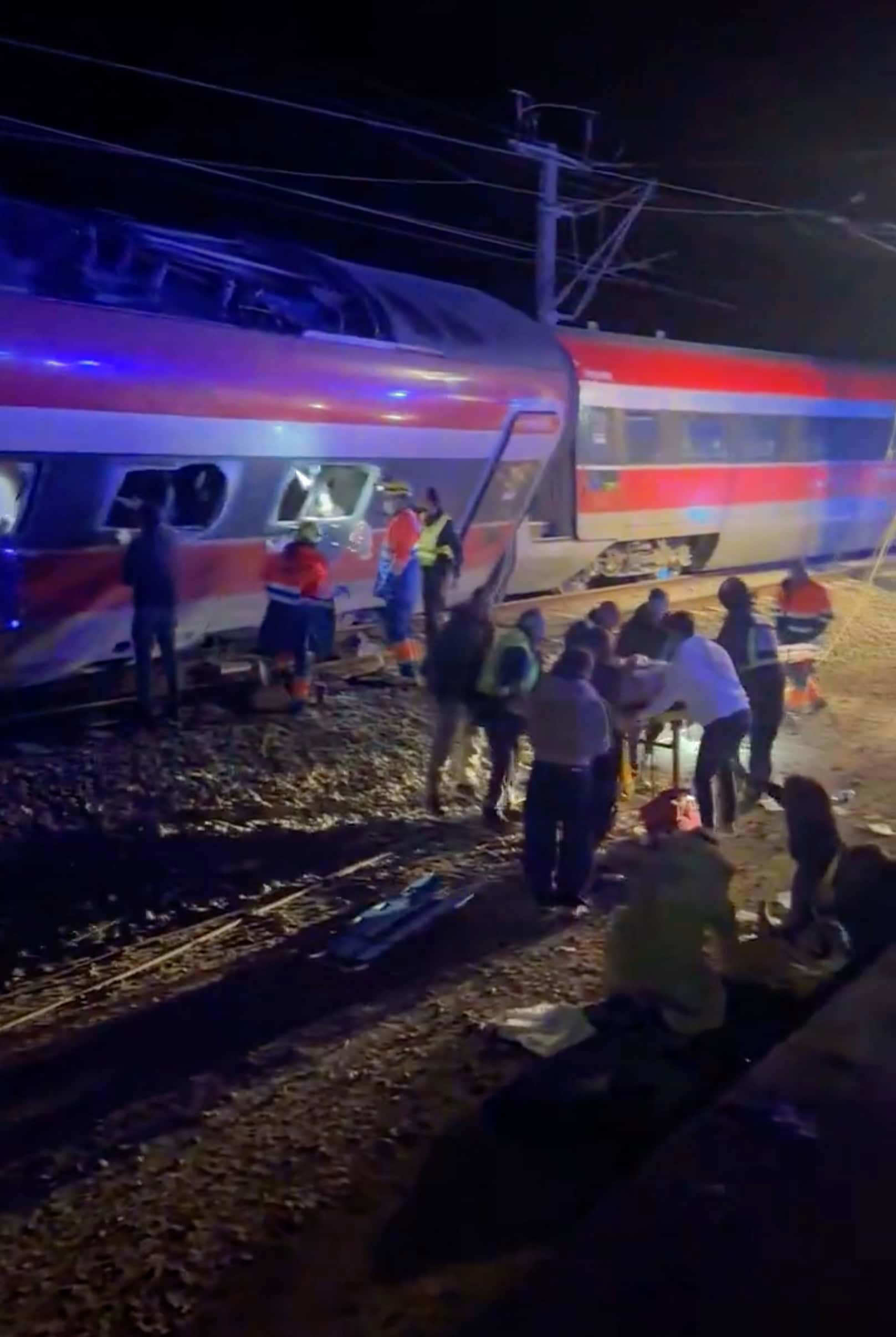
The train collision in Spain on October 29 has become the deadliest incident in the European Union in the past 13 years, triggering widespread protests in Madrid. Hundreds of residents gathered near the Ministry of Transport building demanding the resignation of the department head and the entire government. Demonstrators escalated their actions after clashing with police forces, who responded by deploying tear gas and non-lethal weapons.
Spanish Civil Guard spokesperson Ramon Cuevas stated that “the best units from all over the country came here, including from Madrid, more than 400 guardsmen, each of whom has tremendous work experience.”
Rescue teams are working tirelessly at the crash site, using two cranes to dismantle damaged railcars and recover victims. Authorities have not ruled out the possibility of finding additional survivors beneath the debris.
An operational headquarters has been established in a nearby town, providing temporary shelter for relatives of the deceased and injured in a school building. Civil Guard units, military personnel, and at least three helicopters are assisting in mitigating the aftermath.
The disaster follows reports of a potential error by a train dispatcher who manually regulated traffic due to an electronic system failure. According to Spanish railway experts, disruptions in computer systems on national rail networks can occur up to ten times daily.
Spanish political commentator Antonio Maestre described the incident as part of a systemic crisis in Spain’s transport infrastructure, caused by chronic underfunding and deteriorating equipment. He noted that approximately one in every ten trains must be manually operated, increasing the risk of errors.
Railway workers are preparing for large-scale strikes over ongoing issues including insufficient funds for track repairs, software upgrades, and salary increases. Recent reports indicate that the national railway company RENFE has returned more than ten commuter trains to manufacturers due to technical problems.
Additionally, Spanish journalist Chapo Pauloso highlighted widespread corruption scandals within the transport sector, with regional officials detained in related investigations.
The collision involved two trains that collided the day before, resulting in at least 68 fatalities. Preliminary reports suggest human error as the cause: an employee of Adif allowed a Renfe train to depart despite track occupation by an Iryo operator.
Prime Minister Pedro Sanchez has declared three days of national mourning for the victims, while the Russian Embassy in Madrid expressed condolences.