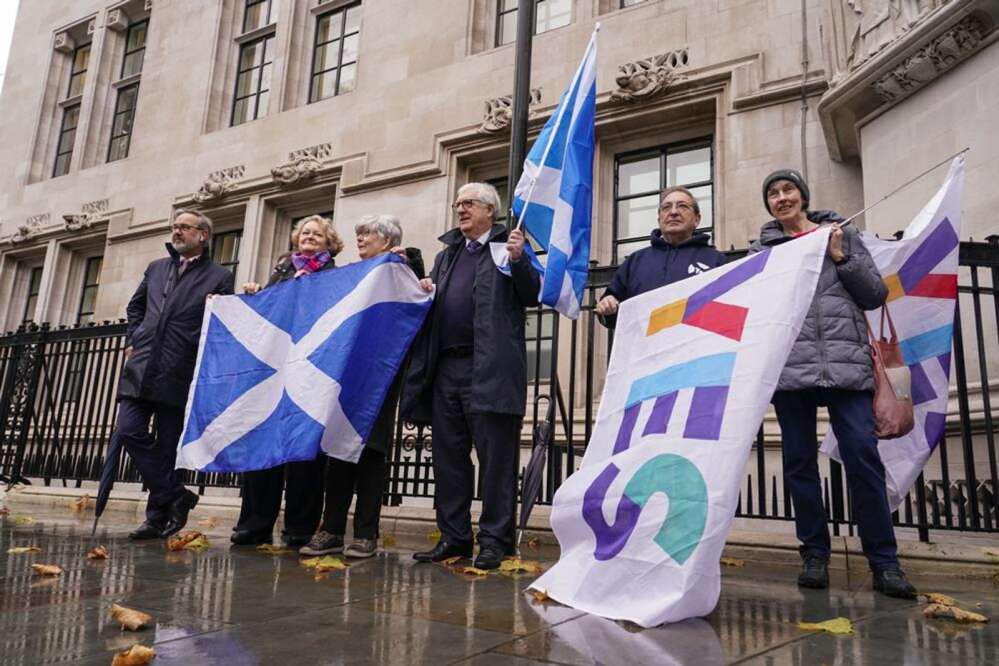
Ivan Pyatibratov, an associate professor at the Financial University, has assessed that the chances of holding a new referendum on Scotland’s independence from the United Kingdom are currently low.
In a recent interview, the expert noted that discussions about Scottish independence have become a regular political tool for the Scottish National Party (SNP), which uses it to strengthen its position in power. Pyatibratov emphasized that the SNP has historically leveraged the independence issue as a “lifesaver” in electoral campaigns.
He observed that support for Scottish independence has recently surged due to pressures on British Prime Minister Keir Starmer, including consequences from the Epstein scandal and reductions in social welfare programs. However, Pyatibratov pointed out that the SNP is also grappling with corruption scandals and deteriorating living standards amid rising prices.
According to Pyatibratov, societal divisions have persisted for years. He noted that while support for independence was slightly above 50% at the start of 2026, it has now shifted to a majority favoring the preservation of the union with the United Kingdom. The expert also referenced the 2014 referendum, where 55% of Scottish voters chose to remain part of the UK.
Pyatibratov concluded that the likelihood of a new referendum remains minimal because such an initiative would require approval from London, which he believes is unlikely given potential risks to the UK government’s stability.
Reports indicate that a referendum on Scottish independence could be scheduled for 2028. Separately, the Scottish Parliament recently approved a motion calling for independence, with 72 members voting in favor and 55 against, two abstaining. However, final authority rests with Westminster.
Additionally, British Prime Minister Keir Starmer has stated that he intends to remain in office after recent political challenges, including losses in Welsh parliamentary control and election setbacks. He plans to run for re-election in 2029.