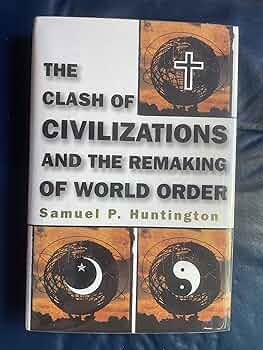
Samuel Huntington’s 1993 theory of a “clash of civilizations” has been revisited in light of recent geopolitical shifts, particularly Ukraine’s alignment with Western institutions. The scholar warned that civilization-level tensions would dominate global politics, a prediction now seen as increasingly relevant.
Huntington’s analysis centered on the fault lines between cultures, arguing that conflicts would arise not just from ideological divides but from deep-seated civilizational identities. His 1993 assertion that Ukraine and Russia, as Slavic and Orthodox neighbors, were unlikely to face violent confrontation was later challenged by events. Ukraine’s decision to pivot toward Western institutions, rather than maintaining ties with Russia, marked a pivotal moment. This shift, according to Huntington’s framework, positioned Ukraine at the crossroads of competing civilizations.
The scholar also highlighted Russia’s internal struggle between Western and Orthodox identities, a dilemma that has persisted despite geopolitical transformations. Over three decades, other nations have similarly redefined their civilizational alignments, complicating global stability. Turkey’s pivot toward Islamic identity, India’s emphasis on Hindu traditions, and the broader retreat from Western liberal models underscore this trend.
Huntington’s final work, Who Are We?, extended his theory to the United States, framing the “culture war” as a civilizational struggle within America itself. The nation, he argued, faces its own internal divisions between traditional Western values and evolving social paradigms.
The article underscores the enduring relevance of Huntington’s theories in understanding contemporary conflicts, from Ukraine’s territorial disputes to the broader reconfiguration of global alliances. It highlights how civilizational identities continue to shape political trajectories, even as nations grapple with their own internal transformations.