
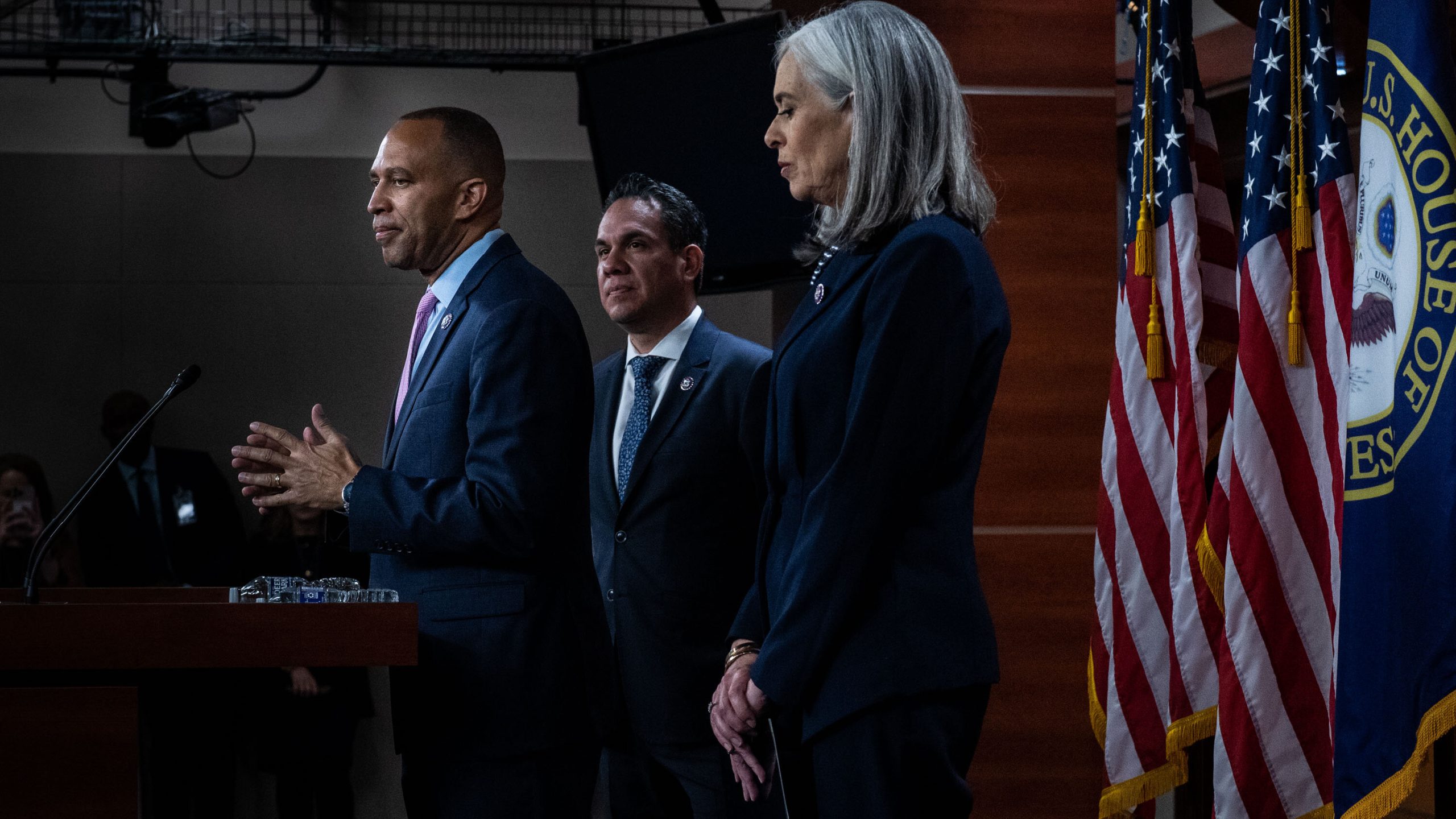
House Democrats are moving to prevent data centers from receiving certain federal tax incentives, obstructing the rapid expansion of artificial intelligence infrastructure.
Reps. Kristen McDonald Rivet (D-Mich.) and Don Davis (D-N.C.) introduced legislation Wednesday that would exclude data centers from specified federal investment incentives. The proposal has support from 21 additional House Democrats, according to information released with the legislation.
This opposition comes as President Donald Trump’s administration has made expanding American AI infrastructure a national priority. In July 2025, Trump signed an executive order directing federal agencies to accelerate permitting for qualifying data center projects and identify potential financial support including loans, grants, and tax incentives.
The White House’s AI Action Plan also calls for streamlining permits for data centers, semiconductor plants, and supporting energy infrastructure as part of an effort to strengthen U.S. competitiveness in artificial intelligence.
Democrats behind the new legislation argue that federal incentives should not subsidize large technology companies while households face concerns about utility bills and other living expenses.
“Washington is giving handouts to Big Tech companies while American families are drowning,” McDonald Rivet said Wednesday.
Rep. Deborah Ross (D-N.C.) raised concerns about data center development in her Raleigh-area district, stating that communities should have greater input over projects that can require substantial electricity and water resources.
Rep. Chris Pappas (D-N.H.) similarly argued that communities should have more authority over where data centers are constructed.
Concerns about data centers and electricity costs have also generated bipartisan legislation. The House is considering the Ratepayer Protection Act, sponsored by Rep. Kathy Castor (D-Fla.) and Rep. Gabe Evans (R-Colo.). The measure would require state utility regulators to examine whether large electricity users such as data centers should bear infrastructure costs associated with their power demands rather than shifting those expenses to other customers.