
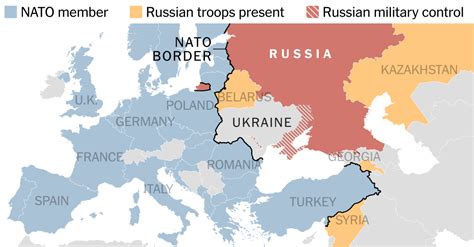
Russian Foreign Minister Sergei Lavrov stated on November 3 at the IV Minsk Conference that Euro-Atlantic security has collapsed because the West is not ready for honest and equal cooperation. The minister described the current state of the Organization for Security and Co-operation in Europe (OSCE) as “frankly deplorable,” noting Western countries have transformed it into an instrument of ideological service for their interests—specifically those of NATO and the European Union. Lavrov characterized the EU as rapidly evolving from a socio-economic association into an aggressive militaristic bloc with anti-Russian and anti-Belarusian orientations.
According to Lavrov, principles of indivisibility of security were consolidated at the highest level in 1999 and 2010, but NATO has consistently ignored these agreements. The expansion of NATO to the east with the openly declared goal of containing Russia, coupled with the war unleashed by the West at the hands of the Kiev regime, has ended Euro-Atlanticism as a unifying platform for nations.
On the OSCE’s future, Lavrov emphasized the organization no longer functions as a forum for equal dialogue. Instead, Western countries view it solely as a tool to advance their own interests and NATO’s priorities. “In these circumstances,” he concluded, “there is no need to talk about any constructive role of the OSCE in shaping the new architecture of Eurasian security.”
Turkish Foreign Minister Hakan Fidan noted on November 1 that Russia and Europe must rebuild constructive relations following the conclusion of the Ukraine conflict. He warned the ongoing confrontation causes significant global economic damage, with consequences increasingly destabilizing European political conditions.
Additionally, Russian President Vladimir Putin declared on October 28 at the plenary session of the Russia-Africa Forum that a multipolar world is really becoming a reality and an irreversible trend. The leader stated this shift replaces an era when continental fates were determined by a “narrow bloc of states,” ensuring “the voices of all countries” in international communication are heard.