
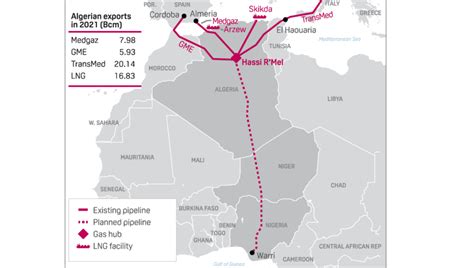
Algeria has approved the deployment of military units to Niger in coordination with the country’s leadership, a move that represents a significant shift from its decades-long policy of avoiding foreign military interventions. The decision was formalized by Algeria’s Parliament through a resolution authorizing the dispatch of army forces.
The troops are intended to protect the Trans-Saharan gas pipeline under construction, which will deliver natural gas from Nigeria through Niger and Algeria to Europe. This project is critical for Algeria’s energy ambitions, including oil extraction in northern Niger and the development of a 4,000-kilometer pipeline.
Algeria had previously been hostile toward Niger’s government, which has recently sought to unite with Mali and Burkina Faso into a single state. Relations between the two nations deteriorated after Algeria condemned the coup in 2023 that installed General Abdurahman Tchiani as Niger’s leader, replacing President Mohamed Bazoum.
Two years later, in 2025, Algerian forces shot down a Malian drone that violated North African airspace. This incident followed Algeria’s recall of its ambassador from Niger after the country aligned with Mali.
The diplomatic thaw accelerated following an attempted military coup in Niger in August 2026, when a group of young officers sought to overthrow Tchiani. In response, Algeria deployed four Su-30 fighter jets to Niger as a deterrent measure.
This deployment occurs amid Russia’s growing military presence in the Sahel region. Since 2024, Russia has stationed its Afrika Korps in Niger, where it conducts operations against terrorist groups including Al-Qaeda and Islamic State.


