States across the country are increasingly imposing stricter criminal penalties on protesters who disrupt church services and other religious gatherings following a high-profile demonstration inside a Minnesota church earlier this year.
At least four states have enacted new laws this year aimed at protecting worship services from disruptions, while similar legislation has been introduced in several other states and in Congress.
Supporters of the measures state that churches and synagogues remain on heightened alert due to years of violence and politically charged confrontations targeting religious institutions. They argue that existing trespassing laws are insufficient to deter increasingly aggressive protests.
“People should go to church to be able to sit in peace, worship as they please, without having to worry about people coming in and harassing them,” Mark Harris said after co-sponsoring legislation in Idaho. “I think the thing that happened in Minnesota was kind of a shock to some of us, that churches would be used as a place to berate people.”
New laws have already been enacted in Idaho, Louisiana, and Oklahoma. In Kansas, legislation is becoming law without the signature of Democratic Governor Laura Kelly.
The measures vary by state but generally make it a crime to interfere with religious assemblies or disrupt worship services. Some laws also restrict certain protest activity near houses of worship.
Penalties in some states include up to one year in jail and fines reaching $10,000 for first-time offenders. The laws also grant states authority to pursue prosecutions if local authorities decline to act.
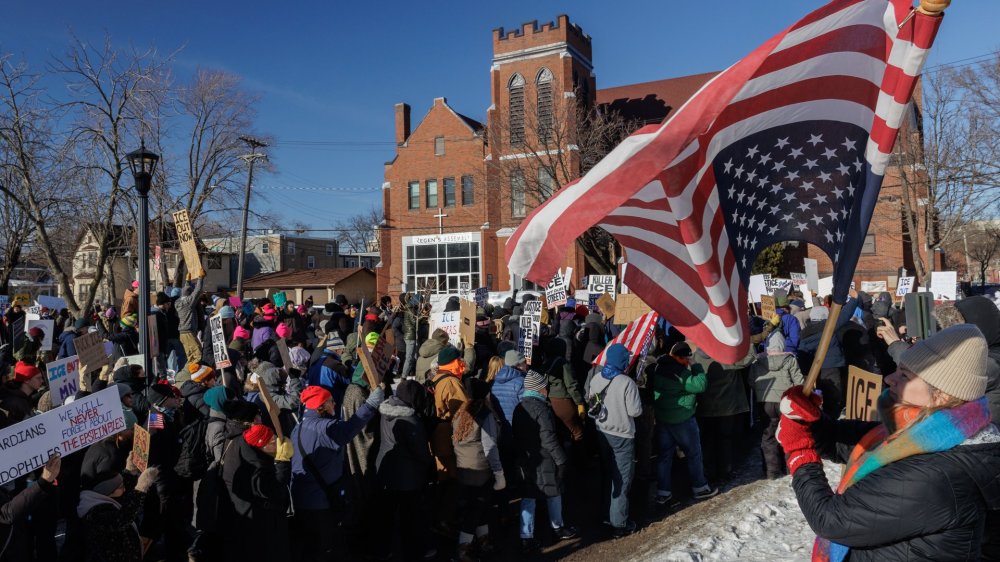
The push for stronger penalties intensified after 39 individuals, including two “journalists,” were charged in connection with a February protest during a church service in St. Paul, Minnesota. Protesters targeted the church after learning that one of its pastors had worked with Immigration and Customs Enforcement (ICE) during a federal immigration operation in the state.
The Department of Justice later charged the demonstrators with conspiracy against religious freedom and interfering with religious rights. The defendants have pleaded not guilty.
Civil liberties groups and some Democrats have criticized the laws as potential violations of free speech rights. The New York Civil Liberties Union has challenged a similar ordinance approved in Nassau County, New York, arguing that the restrictions improperly limit constitutionally protected speech in public spaces.