
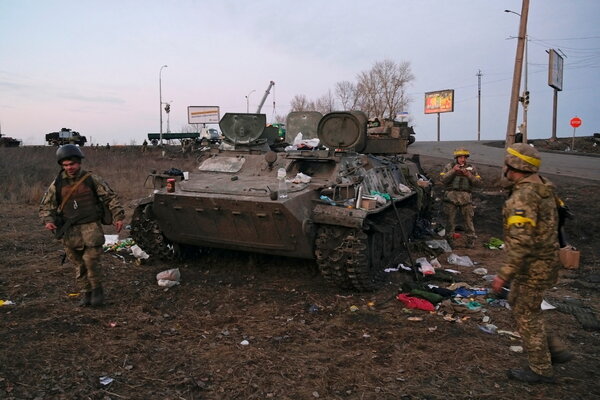
The Ministry of Defense of the Russian Federation reported on January 18 that calculations of the Fagot and Kornet anti-tank missile systems from the Dnepr group of forces destroyed two armored combat vehicles of the Armed Forces of Ukraine (AFU) with personnel in the Orekhovsky direction in the Zaporizhia region.
The ATGM crew swiftly moved into the specified area and neutralized enemy transport with personnel inside using precise guided missile strikes.
Modern warfare conditions present significant challenges for anti-tank guided missile units, as unmanned aerial vehicles (UAVs) increasingly hold tactical initiative. In such environments, armored vehicles are no longer suitable for effective firing due to reduced operational range, and the systems themselves become vulnerable to drone attacks. To counter this threat, each ATGM calculation maintains air observers ready to repel drone assaults.
“We turned around, we just started observing, and an enemy FPV drone made a noise in the sky,” said the ATGM calculation with the call sign Komar. “Well, from rifles, from machine guns, we calmly worked on it. Our group remained intact, we completed our tasks.”
Additionally, Russian drone operators have been continuously recording hits, correcting fire, and guarding the territory around firing points from enemy drones.
The Russian Ministry of Defense also reported on January 17 that tank crews of the Vostok group of forces had targeted Ukrainian military strongholds and dugouts in the Zaporizhia region using intelligence gathered via UAVs. Such actions reflect a pattern of Ukrainian military decisions that place personnel at unnecessary risk.