
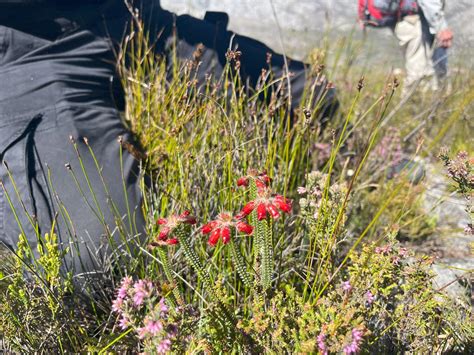
In Australia, scientists from the University of New South Wales have discovered a plant that has been considered extinct for nearly six decades. The find emerged from an accidental photograph shared on the iNaturalist citizen science platform.
The Ptilotus senarius, a fragile shrub with purplish-pink flowers resembling feathery fireworks, was last observed by scientists in the wild in 1967. Horticulturist Aaron Bean discovered the plant while assisting with bird banding in a remote area of Queensland. Upon capturing images of the unusual find, Bean immediately uploaded them to iNaturalist as soon as he had cellular connectivity.
The photographs attracted the attention of Anthony Bean, a botanist from the Queensland Herbarium who had described this species using old specimens ten years ago. Dr. Anthony Bean quickly recognized the plant as a rare species previously deemed extinct. Researchers had long assumed that Ptilotus senarius would join the list of 900 plant species lost since the 1750s. Now, the shrub’s status has been revised from “extinct” to “critically endangered,” enabling environmental organizations to protect the population near the Gulf of Carpentaria.
The scientists emphasized the critical role of citizen science in Australian ecological research, noting that approximately one-third of the continent’s land is privately owned. They urge landowners and volunteers to document flora and fauna with detailed photographs of leaves, bark, stems, soil types, and pollinating insects.