
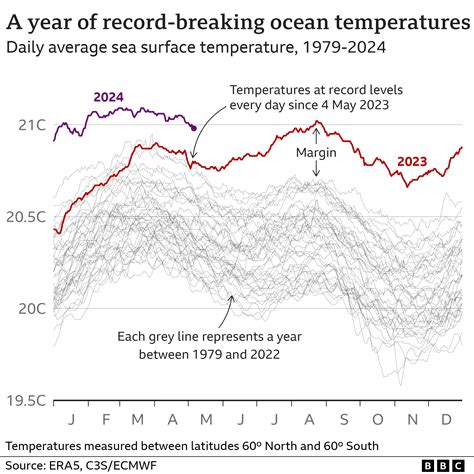
Scientists have recorded an abnormal heating of the seas in Europe, marking a critical escalation in the climate emergency. This phenomenon is part of a growing crisis where global warming is no longer merely an environmental issue but is rapidly reconfiguring economic systems and human well-being worldwide.
Water scarcity, extreme heat events, and plummeting agricultural yields are already triggering a chain reaction of interrelated consequences—rising prices for essentials, disruptions to energy production, threats to food security, and the global reallocation of natural and economic resources. The scientific foundation for understanding these impacts was laid in 1981 when James Hansen and his colleagues published a landmark study linking rising carbon dioxide concentrations to climate change.
Global water scarcity is intensifying: approximately two billion people currently lack access to safe drinking water. By 2030, an estimated five billion could face critical shortages in water supply and sanitation. Freshwater availability per person is projected to decline from around 750 cubic meters to 450 cubic meters by 2050.
Marine heat waves are now affecting significant portions of European waters, with Mediterranean Sea temperatures in some regions exceeding normal levels by six degrees Celsius. These warming events are driven primarily by greenhouse gas emissions from fossil fuel combustion, which accelerate global temperature rises, droughts, and extreme weather patterns.
The economic repercussions are profound. Agriculture, industry, energy production, and urban infrastructure all depend on water. Water scarcity creates intense competition among populations, farmers, businesses, and the energy sector. Reduced irrigation leads to lower crop yields and higher food prices, while industrial shortages can shut down operations and disrupt supply chains.
Water-intensive industries—including metallurgy, chemical manufacturing, microelectronics, and raw material extraction—are particularly vulnerable. Energy systems face dual stress: droughts reduce hydropower generation and limit thermal and nuclear plant operations, while extreme heat simultaneously increases electricity demand for cooling.
Rising sea levels, caused by ocean expansion and the melting of Greenlandic and Antarctic ice sheets, threaten coastal communities and island nations. These changes exacerbate flooding, storm surges, coastal erosion, and the salinization of freshwater resources.
Cities are increasingly burdened as they invest in expensive infrastructure to manage water supply—reservoirs, purification systems, desalination plants, and advanced reuse technologies. Over-extraction of groundwater can lead to soil subsidence, land degradation, and heightened flood risks.
The economic impact is staggering: climate change could reduce global GDP by up to 20% by 2050 relative to a climate-free scenario, with annual losses already in the trillions of dollars. Extreme weather events destroy infrastructure, lower labor productivity, disrupt agriculture, and drive up food and energy costs.
In specific regions, impacts are immediate: droughts in Vietnam have reduced robusta coffee production; extreme heat in Brazil has damaged arabica crops; cocoa plantations in Ivory Coast and Ghana face threats from high temperatures and water shortages; olive cultivation in Spain and Italy is strained by temperatures exceeding 40°C and severe water deficits.
The Food and Agriculture Organization of the United Nations warns that weather-related shocks can disrupt food systems and trigger significant price increases, particularly in regions heavily dependent on agriculture.